
Tough Dog
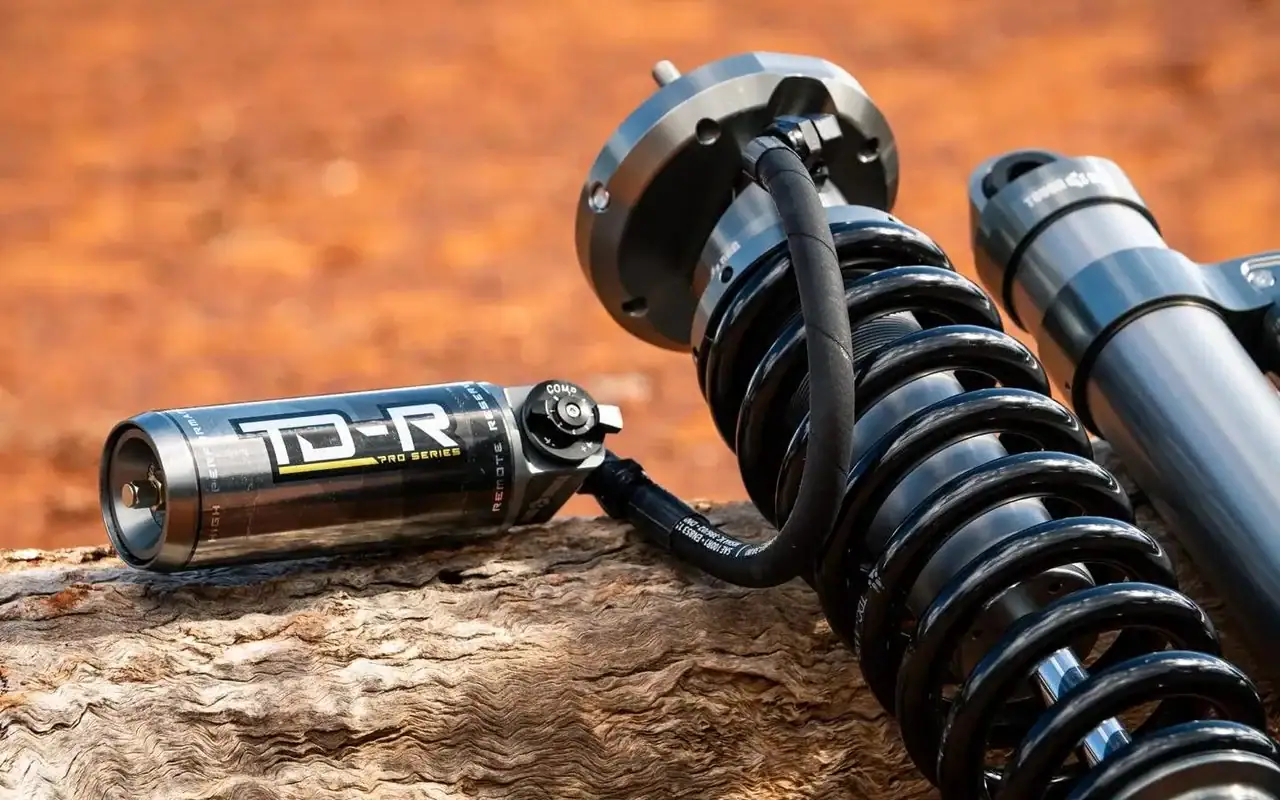
Australian-made suspension built for heavy touring and work use. Foam-cell and adjustable shocks that suit vehicles running constant heavy loads; certified GVM kits for most popular platforms.
Most touring 4WDs are over their legal weight before the fridge goes in. A GVM upgrade re-rates what your vehicle can legally carry. Assessed, fitted and certified from one Perth workshop.
Bull bar, winch, drawers, fridge, water, recovery gear, a second battery. Then passengers and a full tank on top. Piece by piece it all makes sense. Added up, it puts a lot of touring 4WDs over their factory GVM, the Gross Vehicle Mass, which is the maximum your vehicle is legally allowed to weigh, loaded.
Driving overloaded is illegal, it can become a problem for your insurance, and it's hard on brakes, suspension and tyres. The exact components you're relying on out there.
None of these are mistakes. They're just weight, and weight has a legal limit.
What adds up
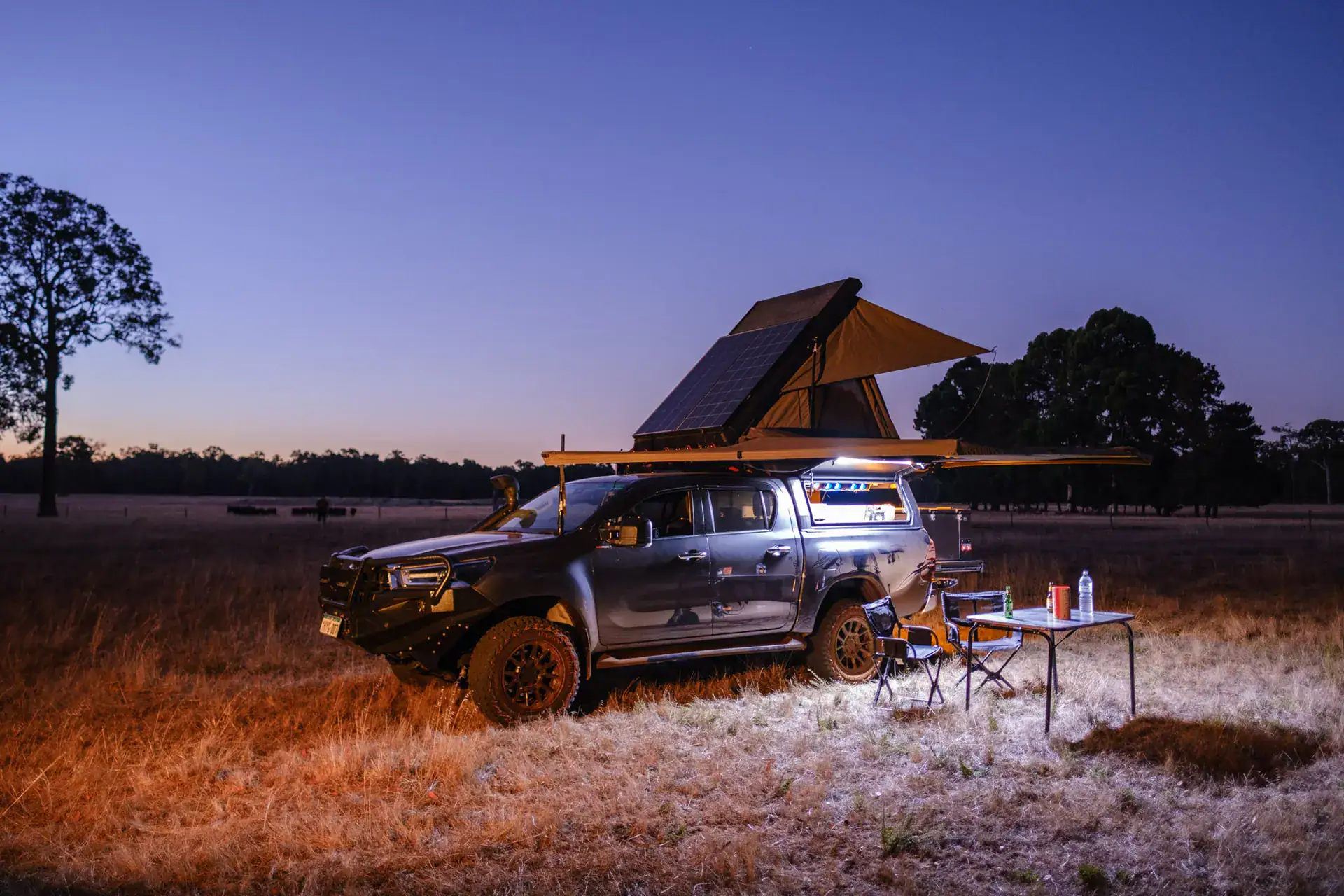
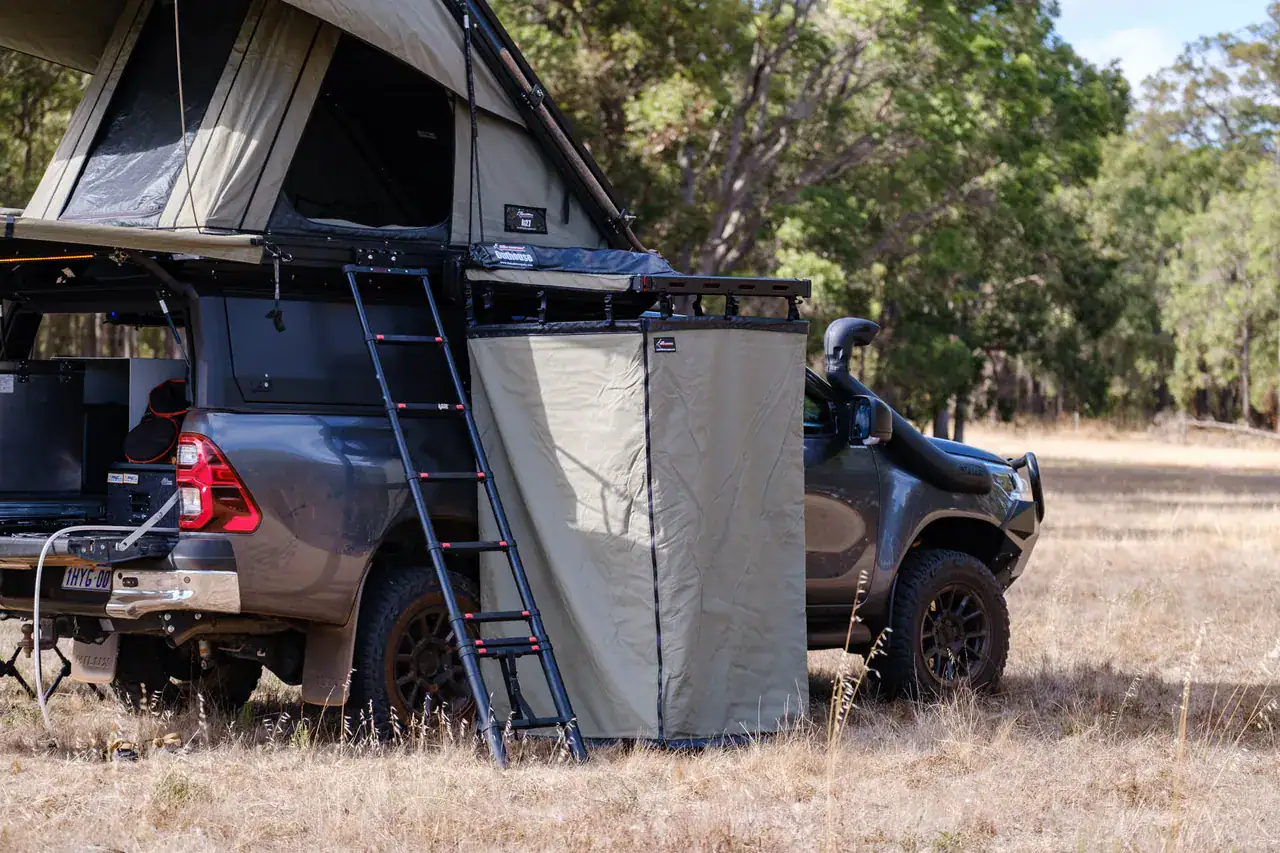
This is our own N80 Hilux SR5 build, the one in the photo. Factory GVM 3,100 kg, kerb weight roughly 2,070 kg, so about 1,030 kg of payload to work with. Here's what's bolted on and what it weighs.
Start from our N80. Untick what you don't run, set how many of you travel and what sits on the tow ball. Ball weight is the downforce the trailer puts on the towbar, and it counts as load on the vehicle the same way gear does.
A GVM upgrade raises what the vehicle may weigh. It does not raise GCM, so the two bars move independently. Leave the trailer box empty and the van is estimated at ten times the ball weight, the usual ratio.
96 kg over the Hilux N80's factory GVM.
104 kg to spare, before anyone tows anything. Keep the tent on the roof and hitch a caravan or a big plate boat, and 150 to 250 kg lands on the tow ball. That counts as vehicle weight. At 200 kg this Hilux is 96 kg over its factory GVM, which is exactly why it runs a Tough Dog GVM kit, re-rated to 3,510 kg. See the full build
Component weights are category figures from our build data, not weighbridge readings. Your vehicle's own numbers are on the compliance plate, and on the weighbridge, certified, front and rear axle.
A GVM upgrade is an engineered suspension package that raises your vehicle's certified maximum loaded weight. It's not a lift kit with paperwork. The spec is matched to how your vehicle is actually loaded, then certified so the new rating is legal.
The suspension side matters just as much: the right springs and shocks carry the load level, keep the steering predictable, and stop the rear sagging with the camper on. GVM sets what you can carry. Suspension decides how it drives while you do.
Most certified kits add between 200 kg and 500 kg of legal payload, depending on the vehicle and the kit available for it. Many include a mild lift of around 40 to 50 mm as a side benefit.
More weight is more to stop, and more heat to get rid of. The kit above handles carrying the load and controlling it. Brakes and cooling are the other half of the same job, and they are rarely part of the conversation.
We can spec uprated brakes alongside the kit, DBA or Bendix depending on the vehicle, and a transmission cooler where the towing or the terrain asks for it. The wheels are already off for the suspension, so it is the cheapest time to do it. Not every build needs it, and we will tell you straight at the consult if yours does not.
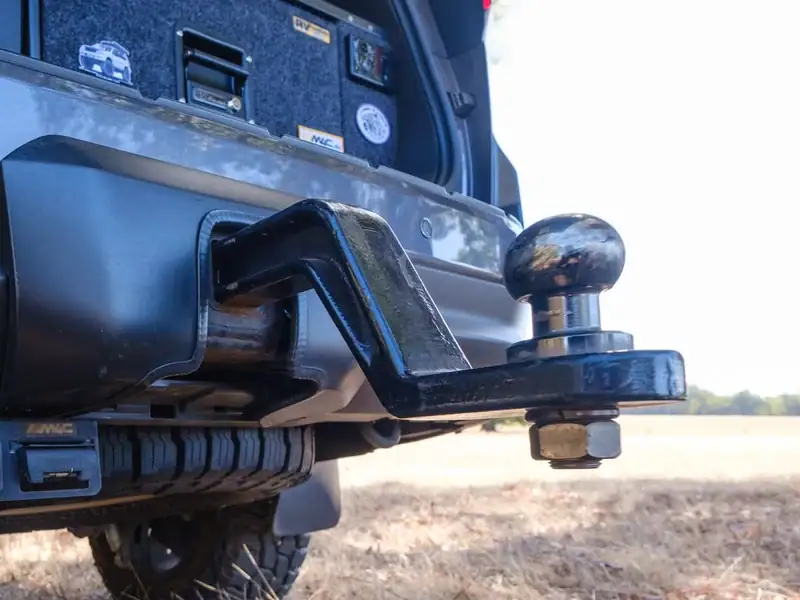
Your tow ball weight counts toward your vehicle's GVM. When you hook up, the downforce on the coupling sits on your rear axle. That's vehicle mass, not trailer mass. Most caravans and camper trailers put 150 to 250 kg on the ball, and that comes straight off your available payload. It's how people who "aren't over GVM" go over the moment they start towing.
GCM, Gross Combined Mass, is the legal maximum for your vehicle plus whatever it's towing, together. On an N80 Hilux the GVM is 3,100 kg and the braked towing capacity is 3,500 kg, but the GCM is 5,950 kg. To tow the full 3,500 kg, the vehicle itself can only weigh 2,450 kg, about 380 kg of payload. Two adults at 90 kg each take 180 kg of that, leaving 200 kg for every accessory, the fuel, the water, the food and the luggage. You can't max out both numbers at once.
A GVM upgrade raises your GVM. It does not raise your GCM. More room at the vehicle for gear, passengers and ball weight; the same combined limit, so your maximum towing weight drops by whatever you've added. For camper trailers, boats and box trailers the maths usually works out fine. Towing a 3,000 kg+ caravan, GCM may be the real constraint whatever your GVM says.
This is why the weight check consult walks through GVM, GCM, ball weight and your towing setup as one picture. They all connect.
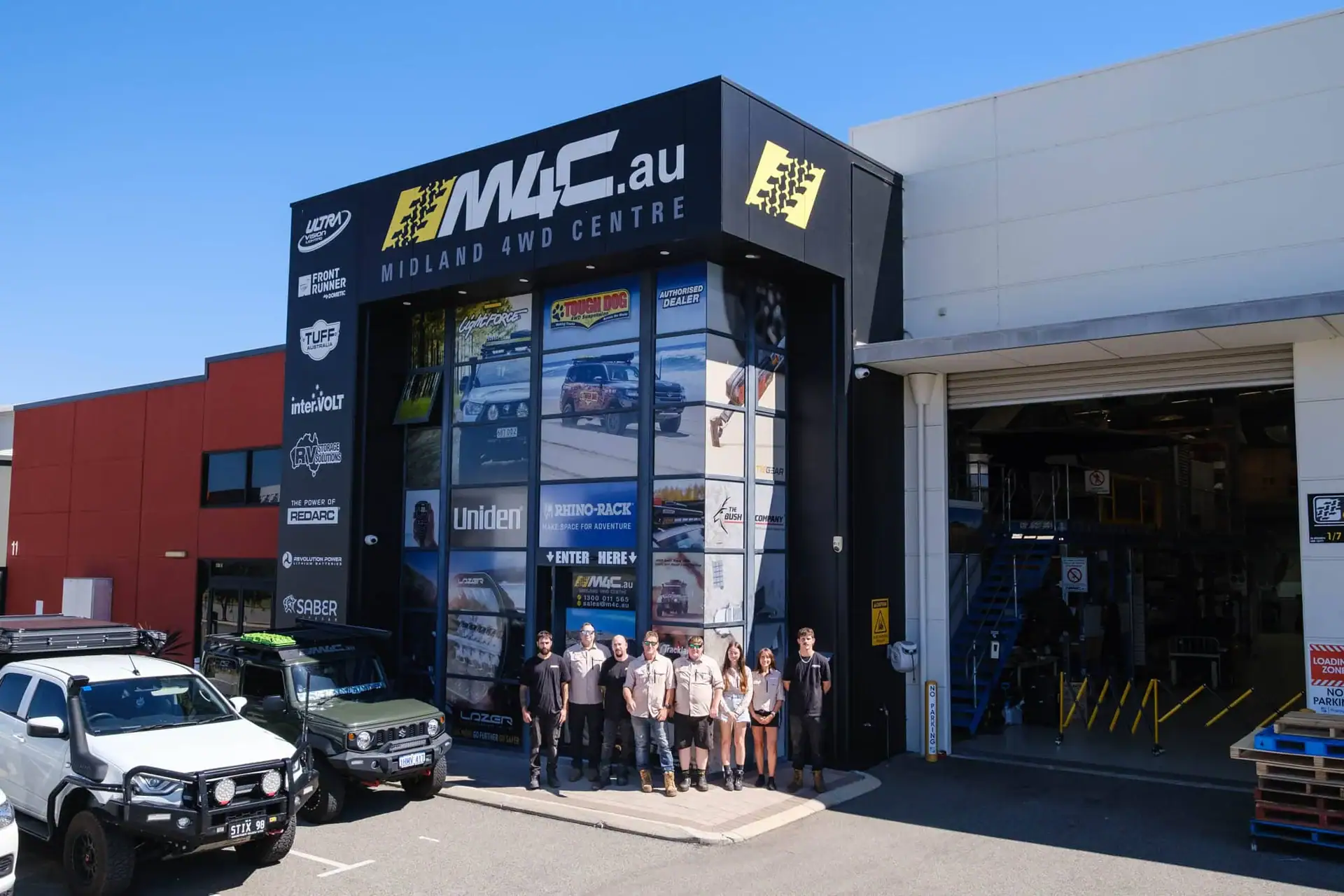
Most people who come to us for GVM aren't trying to break a rule. They've built a good tourer one accessory at a time and nobody ever put it on the scales. We've been on the other side of that conversation for 6,500-plus vehicles, and we run the same setup ourselves.
We're fully independent, so the kit is chosen for your vehicle and your load, not for a supplier agreement. And the compliance side is handled from the same Canning Vale workshop as the fitting, so you're not chasing an engineer, a fitter and a paperwork trail separately.
“I went with M4C because of their very detailed quote. All questions were answered and I felt they cared about the enquiry a lot more than other shops. The communication was excellent. Will definitely come back for anything else required.”
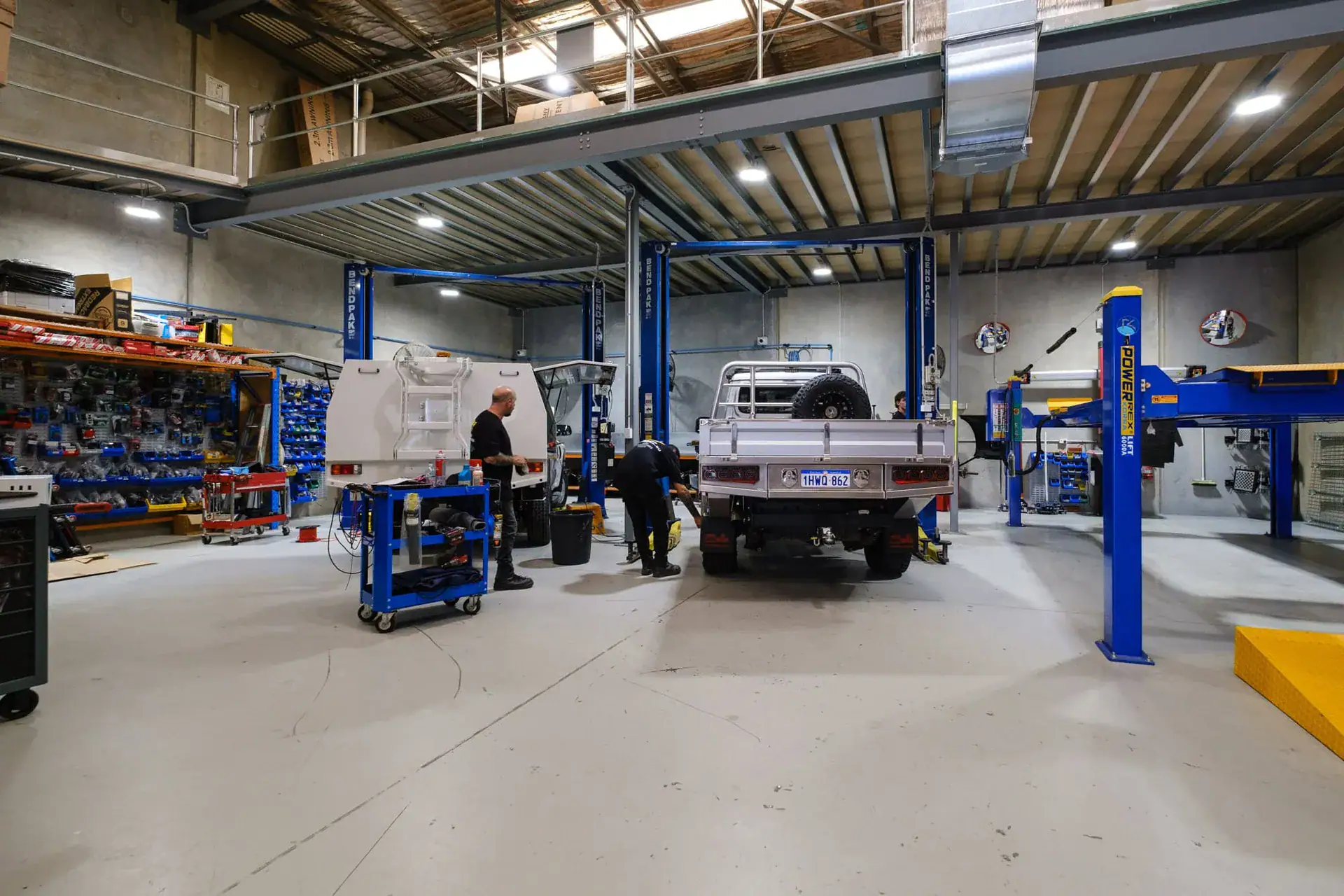
We weigh the vehicle as it sits, check what's fitted, and talk through how you use it: touring, work, towing, or all three. Not sure what your 4WD weighs loaded? Ask us. The check costs nothing.
We're fully independent, so the GVM kit is specced for your load and your driving. Tough Dog, Outback Armour, Airbag Man and other proven gear, chosen on what works, not what a supplier agreement says to push.
Fitted in our Canning Vale workshop, with the compliance paperwork and certification handled through the WA Department of Transport. You drive out legal, with the new rating on the vehicle.
GVM is usually stage one of a touring build. Your legal carrying capacity shapes every other decision, so it pays to get it sorted first.
We're not a single-brand shop. Different vehicles, loads and budgets call for different suspension, so the kit is matched to the job, not to a supplier agreement.
Australian-made suspension built for heavy touring and work use. Foam-cell and adjustable shocks that suit vehicles running constant heavy loads; certified GVM kits for most popular platforms.
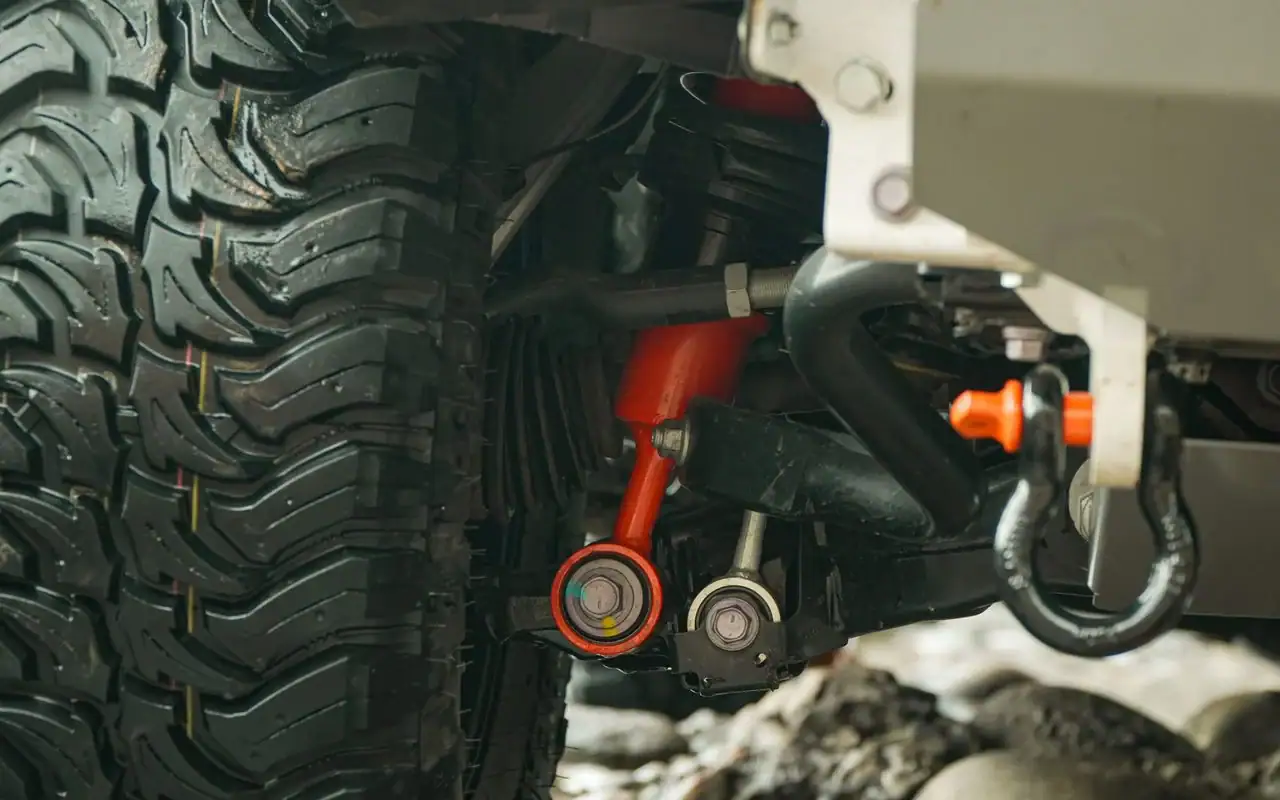

Purpose-built for outback touring: kits designed around real touring loads that stay comfortable on corrugations when fully loaded. The pick when ride quality matters as much as capacity.
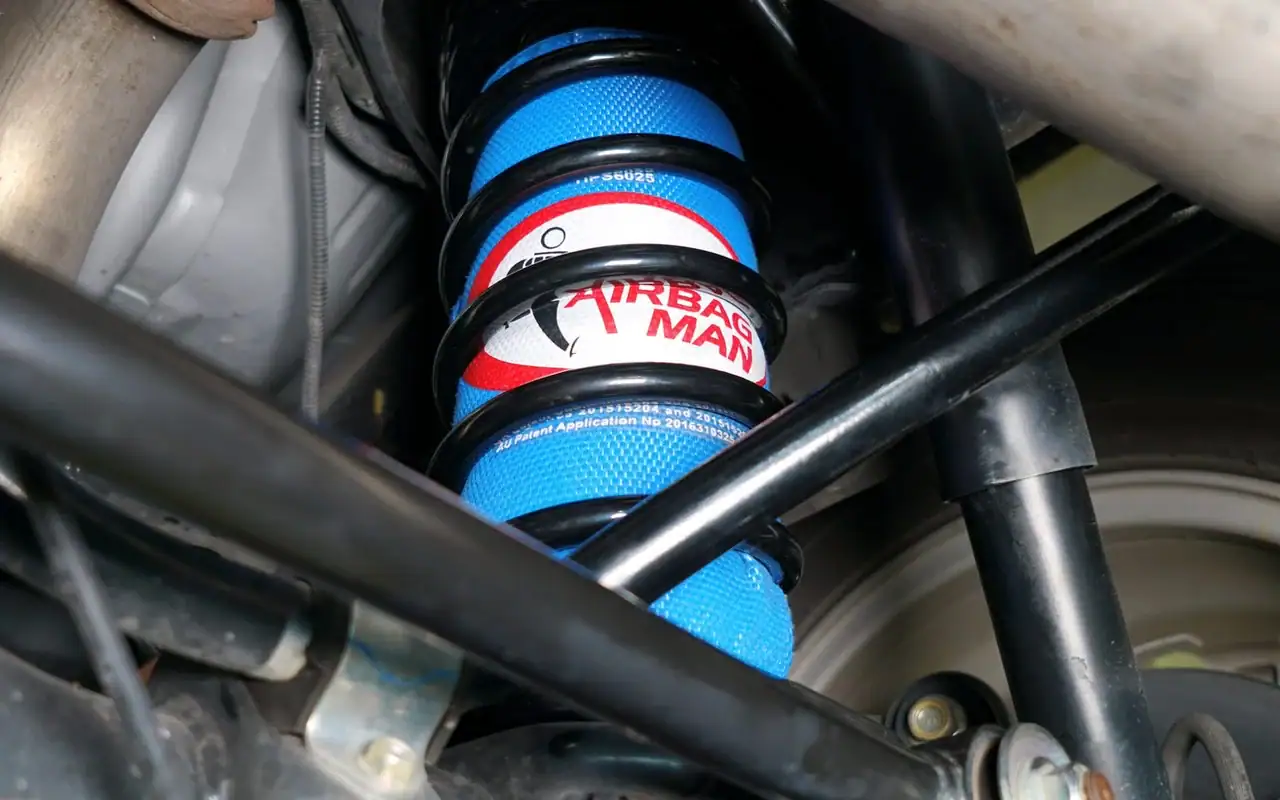
Air assistance that adjusts load support on the fly, working alongside your springs. Ideal for vehicles that run heavy some days and empty others: work utes, tow rigs, weekend tourers. We're a Perth stockist and installer.
We fit Lovells too. Need something else? We can source Dobinsons and others on request. Tell us the vehicle and the load and we'll spec the kit.
Before you can tell whether you need a GVM upgrade you need your starting numbers. Factory GVM, approximate kerb weight and the payload that leaves you, plus how much a certified kit typically adds, for the platforms we build most.
| Vehicle | Factory GVM | Approx. kerb | Payload | Typical GVM increase* |
|---|---|---|---|---|
| Toyota Hilux N90 (dual cab, 2024+) | 2,980 kg | 2,045 kg | ~935 kg | +470 kg |
| Toyota Hilux N80 (dual cab) | 3,100 kg | 2,070 kg | ~1,030 kg | +410 kg |
| Ford Ranger Next Gen (dual cab, 2022+) | 3,270 kg | 2,236 kg | ~1,034 kg | +430–480 kg |
| Isuzu D-Max (dual cab) | 3,100 kg | 1,945 kg | ~1,155 kg | +600 kg |
| Toyota LandCruiser 300 Series | 3,300 kg | 2,590 kg | ~710 kg | +840 kg |
| Toyota LandCruiser 200 Series | 3,300 kg | 2,610 kg | ~690 kg | +500–900 kg |
| Toyota LandCruiser 79 Series (double cab) | 3,300 kg | 2,280 kg | ~1,020 kg | +480–850 kg |
| Toyota Prado 250 Series (2024+) | 3,060 kg | 2,310 kg | ~750 kg | +740 kg |
| Toyota Prado 150 Series | 2,890 kg | 2,225 kg | ~665 kg | +410 kg |
| Nissan Patrol Y62 | 3,500 kg | 2,779 kg | ~721 kg | +400 kg |
| Nissan Navara NP300 | 2,910 kg | 1,935 kg | ~975 kg | +640 kg |
| VW Amarok (2023+) | 3,270 kg | 2,204 kg | ~1,066 kg | +480 kg |
Weights are approximate and vary by variant, options and factory-fitted accessories. Check your compliance plate. *Typical GVM increase: the range across the certified post-registration kits on file for that model (Tough Dog and Terrain Tamer, as published). Ratings change and kits vary by variant, so we confirm the current figure for your vehicle at assessment.
Worth noting: the new N90 Hilux has a lower GVM than the N80 it replaced (2,980 kg vs 3,100 kg), dropping payload from about 1,030 kg to about 935 kg. Building an N90 for touring, a GVM upgrade matters more than ever.
The 200 Series and Prado run tight margins too. A 200 Series touring build runs out of payload fast, which is why the 200 Series GVM upgrade is one of our most common jobs.
Also common: MU-X, Everest, Triton, BT-50, 79 single cab, Patrol GU, Jimny, Ram 1500, and most other 4WDs and commercial vehicles on WA roads. If we've not done yours, that'd be a first.
GVM certification rules differ state to state, and WA has its own process. We handle the suspension upgrade, the compliance paperwork, and certification through the WA Department of Transport. Pre-rego or post-rego, we'll tell you straight what applies to your vehicle.
Before first registration (pre-rego): the upgrade is done under Second Stage Manufacture rules, as part of the vehicle being built. This is where the larger increases are possible, sometimes 500 kg or more, because the vehicle is modified before it's ever registered.
Already registered (post-rego): the vehicle is fitted with a certified kit, inspected, and the new GVM rating is endorsed on your registration through the WA Department of Transport. Most of the vehicles we see are in this group.
Federally approved kits go through the standard transport and licensing process. Custom or non-federal builds may need additional engineering. We'll tell you up front if yours does.
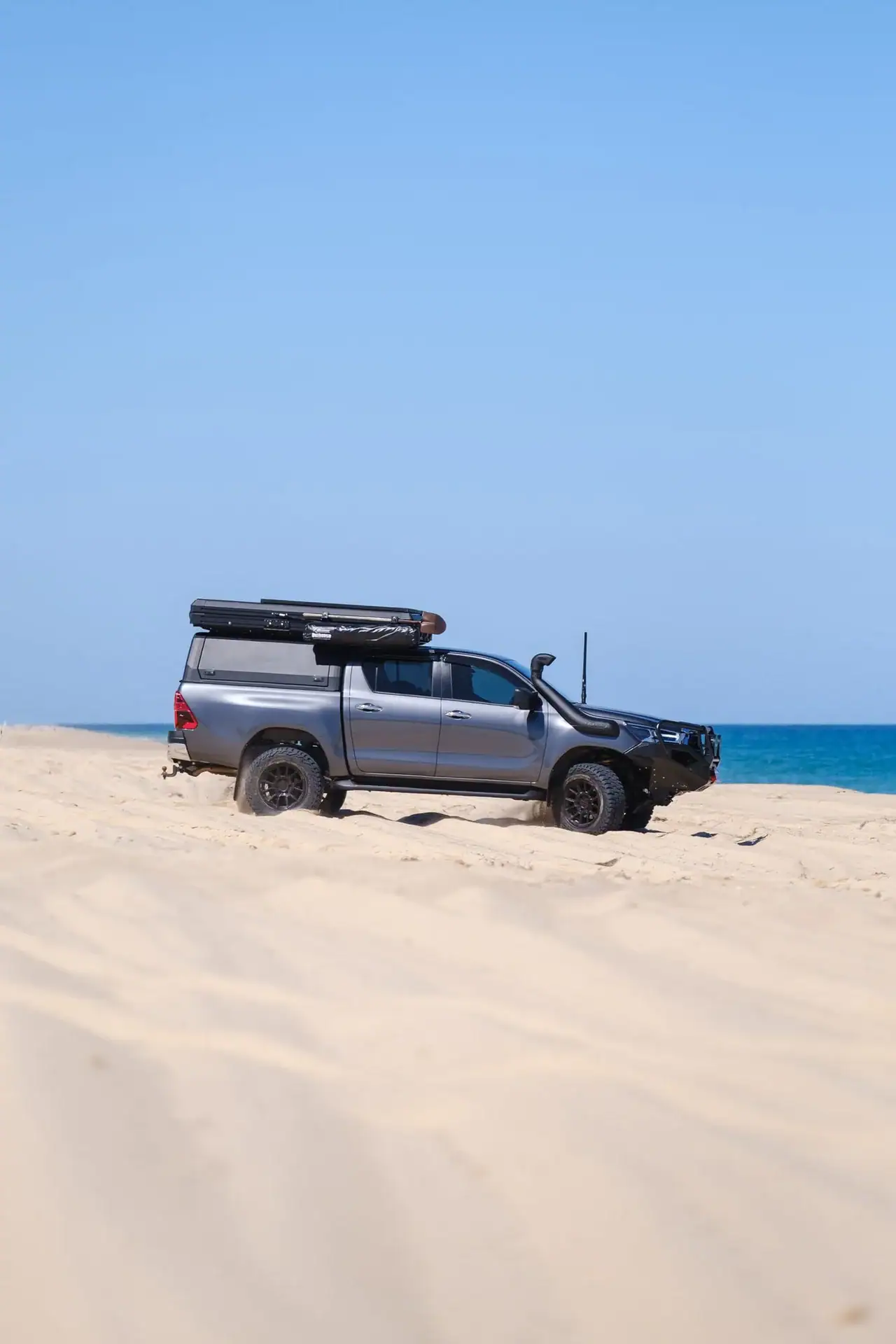
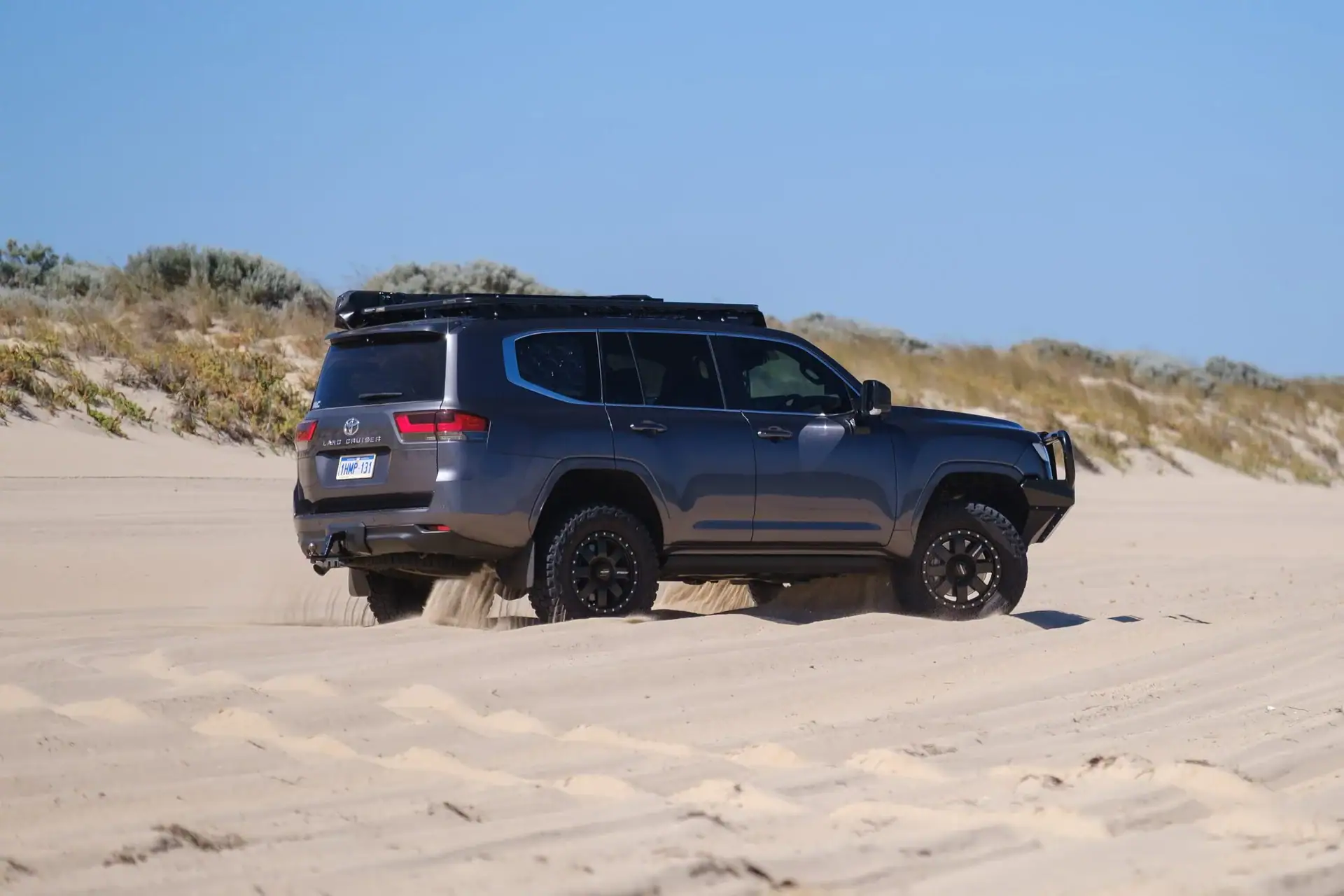
The ledger above, on the road. Tough Dog GVM kit re-rated to 3,510 kg, Bush Company AX27, dual lithium, 150 L of extra fuel.
See the N80 buildAround 710 kg of factory payload is not much on a 300 Series. This one carries a full touring fitout because the GVM was sorted at stage one.
See the LC300 buildIt varies with the vehicle and what the build actually needs, so we don't publish a price list. As a guide, a straightforward setup starts a little north of $5,000 fitted and inspected. An independent front end usually wants upper arms, often a diff drop, sometimes panhard rods and sway bar links, and that runs to $10,500 or $12,000. You get a fixed-price quote after we've assessed the vehicle.
Only if your loaded weight is over, or heading over, your factory GVM. That's why we start with a weight check rather than a sales pitch. Plenty of vehicles just need the right suspension. If the numbers say you're over, a GVM upgrade is the legal fix.
Most certified kits add between 200 kg and 500 kg of legal payload, depending on the vehicle and the kit available for it. Some pre-registration upgrades add more, particularly on the 200 and 300 Series LandCruiser.
Quite possibly. Ball weight counts toward your GVM, and most trailers put 150 to 250 kg on the rear axle. If you're already close with accessories and passengers, that pushes you over. A GVM upgrade gives you the headroom to carry your setup and tow legally. It doesn't raise your GCM, so we check both numbers.
A GVM upgrade raises your legal weight limit and comes with certification. A lift kit raises ride height for ground clearance. They're different jobs, but they can be done together, and many GVM kits include a mild 40 to 50 mm lift anyway.
An engineered suspension kit matched to your load, fitted in our Canning Vale workshop, with the compliance paperwork and certification handled through the WA Department of Transport. Pre-rego or post-rego, we'll tell you which process applies to your vehicle.
It depends on the vehicle and the kit. Some are straightforward; others carry longer lead times from the supplier or the certification step. You'll get a clear timeline at assessment, before you commit.
Usually stage one. Your GVM determines how much you can legally carry, which affects every other decision: suspension spec, electrical, storage, the lot. It's the foundation the staged build plan is built on. See how a staged build plan works
Ask us. The check costs nothing. If you're over, we'll map the fix into a staged build plan. If you're not, you'll know for sure.
In-store Canning Vale, by phone, or via video call. Workshop bookings fill ahead of the spring touring season.
What happens at a weight check consult